Introduction
The notes below relate to the factors involved in designing structures using timber. The notes are primarily based on information included in BS 5268:part 2.
Commercial timbers include hardwoods and softwoods. Hardwoods are produced from broad leaved deciduous trees and softwoods are produced from coniferous trees which have needle like leaves and are evergreen.
Structural timbers are catergorised by a strength class which combines the timber type (softwood or hardwood) and the strength grade. The strength grade is allocated visually or results from testing by machine.
The strength grade classification identified in BS 5268 part 2 are
C14 to C40 for Coniferous = Softwoods and D30 to D70 for Deciduous = Hardwoods.
The numbers refer to the characteristic bending stress i.e ultimate strengths of the woods in N/mm2 before safety factors and margins for loading conditions are included.
BS 5268 identify grade stresses for the strength classes. These stresses are modified by factors related to the design conditions to arrive at the permissible stresses.
Designs should be based either on the grade stresses for the strength classes, or on grade stresses listed for the individual species and grades
Timber used in construction is stress graded using either machine grading or visually graded. Visual grading is carried out by approvided graders who examine the timber for defects e.g knots, wane, resin pockets and distortion. Timber which is accepted for use is graded in one of two caterories GS (General Structural) or SS ( Special Structural) .
Visually graded hardwoods from tropical regions are designated with a (HS) grade ..HS = structural tropical Hardwood. When derived from temperate regions the visually graded timber is designated using TH1,TH2, THA, or THB = structural temperate hardwood grades in accordance with the requirements of BS 5756:2007
Relevant Standards..For comprehensive list of standards Wood related Standards
BS 5268 -2 ;2002 Structural use of timber — Part 2: Code of practice for permissible stress design, materials and workmanship
BS EN 1912:2004: Structural timber Strength classes- Assignment of visual grades and species
BS 4978:1996 Specification of Softwood Grades for Structural Use.
BS 5756:2007 Visual grading of hardwood. Specification
Service Class
Moisture has a significant effect on the mechanical properties of timber and the British standard allocates service class designations to allow for this
The permissible stresses used is generally alocated relevant to the service classes as identified below
a) Service class 1 is characterized by a moisture content in the materials corresponding to a temperature of 20 °C and the relative humidity of the surrounding air only exceeding 65 % for a few weeks per year. In such moisture conditions most timber will attain an average moisture content not exceeding 12 %.
b) Service class 2 is characterized by a moisture content in the materials corresponding to a temperature of 20 °C and the relative humidity of the surrounding air only exceeding 85 % for a few weeks per year. In such moisture conditions most timber will attain an average moisture content not exceeding 20 %.
c) Service class 3, due to climatic conditions, is characterized by higher moisture contents than service class 2.
Note: Design using timber sections greater than 100 thick or deep are generally based on service class 3 because of the difficulty in drying thicker sections.
Species of Trees
BS 5268-2 gives a series of strength classes which for design use can be considered as being independent of species and grade. Guidance as to which species and grades satisfy the strength requirements for each class is given in BS EN 1912. For some applications it may be necessary to specify particular species (or exclude them) from within a strength class to take account of particular characteristics, e.g. natural durability, amenability to preservatives , glues and fasteners. This may be particularly important for hardwood.
Table showing strength grades and tree species that have been assigned by grading organisations in different countries
Note; this table should be only considered as indicative and should not be used in design as a method of selecting a species which has a specified grade.
| Strength Class | Tree Species |
| C14 | Western Red Cedar,Douglas Fir |
| C16 | Hem Fir, |
| C22 | British Pine,spruce |
| C24 | Spruce, Poplar, Larch |
| C30 | Spruce, Poplar, Larch,Pine (redwood) |
| C35 | Douglas Fir |
| D30 | Oak |
| D35 | Beech |
| D40 | Beech, Teak, Eucalyptus |
| D50 | Keruing, Karri, Opepe |
| D60 | Kapur |
| D70 | Balau, Greenheard, Ekki |
Grade stresses and Modulus of Elasticity values for some strength classes relating to service classes 1 & 2
Note: Service class 3 grade stresses are obtained be multiplying the stresses in the tables by the factor K2 ..ref Modifying factors
| Strength Class | Bending parallel to grain |
Tension parallel to grain |
Compression parallel to grain |
Compression perpendicular to grain |
Shear parallel to grain |
Modulus of elasticity |
Characteristic density |
Average density |
||
| Mean | Min | |||||||||
| σm,g,ll | σt,g,ll | σc,g,ll | σc,g,l- | σc,g,l- | τg,ll | Emean | Emin | ρk | ρmean | |
| N/mm2 | N/mm2 | N/mm2 | N/mm2 | N/mm2 | N/mm2 | N/mm2 | kg/m3 | kg/m3 | ||
| C14 | 4,1 | 2,5 | 5,2 | 2,1 | 1,6 | 0,6 | 6800 | 4600 | 290 | 350 |
| C16 | 5,3 | 3,2 | 6,8 | 2,2 | 1,7 | 0,67 | 8800 | 5800 | 310 | 370 |
| C18 | 5,8 | 3,5 | 7,1 | 2,2 | 1,7 | 0,67 | 9100 | 6000 | 320 | 380 |
| C22 | 6,8 | 4,1 | 7,5 | 2,3 | 1,7 | 0,71 | 9700 | 6500 | 340 | 410 |
| C24 | 7,5 | 4,5 | 7,9 | 2,4 | 1,9 | 0,71 | 10800 | 7200 | 350 | 420 |
| C27 | 9,5 | 6 | 8,2 | 2,5 | 2 | 1,1 | 11500 | 8200 | 370 | 450 |
| C30 | 11 | 6,6 | 8,6 | 2,7 | 2,2 | 1,2 | 12300 | 8200 | 380 | 460 |
| C35 | 12 | 7,2 | 8,7 | 2,9 | 2,4 | 1,3 | 13400 | 9000 | 400 | 480 |
| C40 | 13 | 7,8 | 8,7 | 3 | 2,6 | 1,4 | 14500 | 10000 | 420 | 500 |
| D30 | 9 | 5,4 | 8,1 | 2,8 | 2,2 | 1,4 | 9500 | 6000 | 530 | 640 |
| D35 | 11 | 6,6 | 8,6 | 3,4 | 2,6 | 1,7 | 10000 | 6500 | 560 | 670 |
| D40 | 12,5 | 7,5 | 12,6 | 3,9 | 3 | 2 | 10800 | 7500 | 590 | 700 |
| D50 | 16 | 9,6 | 15,2 | 4,5 | 3,5 | 2,2 | 15000 | 12600 | 650 | 780 |
| D60 | 18 | 10,8 | 18 | 5,2 | 4 | 2,4 | 18500 | 15600 | 700 | 840 |
| D70 | 23 | 13,8 | 23 | 6 | 4,6 | 2,6 | 21000 | 18000 | 900 | 1080 |
Grade stresses for selected softwoods for service classes 1 and 2
Stresses applicable to timber 300 mm deep(or wide).
Service class 3 grade stresses are obtained be multiplying the stresses in the tables by the factor K2 ref modifying factors
| Name | Grade | Bending stress | Tension | Compression | Shear | Modulus of Elasticity | ||
| parallel to grain |
parallel to grain |
parallel to grain |
perpendicular to grain |
parallel to grain | Mean | Minimum | ||
| σm,g,ll | σt,g,ll | σc,g,ll | σc,g,l- | τg,ll | Emean | Emin | ||
| N/mm2 | N/mm2 | N/mm2 | N/mm2 | N/mm2 | N/mm2 | N/mm2 | ||
| Redwood/whitewood | SS | 7,5 | 4,5 | 7,9 | 2,1 | 0,82 | 10500 | 7000 |
| GS; | 5,3 | 3,2 | 6,8 | 1,8 | 0,82 | 9000 | 6000 | |
| British larch | SS; | 7,5 | 4,5 | 7,9 | 2,1 | 0,82 | 10500 | 7000 |
| GS | 5,3 | 3,2 | 6,8 | 1,8 | 0,82 | 9000 | 6000 | |
| British pine | SS | 6,8 | 4,1 | 7,5 | 2,1 | 0,82 | 10500 | 7000 |
| GS | 4,7 | 2,9 | 6,1 | 1,8 | 0,82 | 9000 | 6000 | |
| British spruce | SS | 5,7 | 3,4 | 6,1 | 1,6 | 0,64 | 8000 | 5000 |
| GS | 4,1 | 2,5 | 5,2 | 1,4 | 0,64 | 6500 | 4500 | |
| Douglas fir | SS | 6,2 | 3,7 | 6,6 | 2,4 | 0,88 | 11000 | 7000 |
| GS | 4,4 | 2,6 | 5,2 | 2,1 | 0,88 | 9500 | 6000 | |
| Parana pine | SS | 9 | 5,4 | 9,5 | 2,4 | 1,03 | 11000 | 7500 |
| GS | 6,4 | 3,8 | 8,1 | 2,2 | 1,03 | 9500 | 6000 | |
| Pitch pine | SS | 10,5 | 6,3 | 11 | 3,2 | 1,16 | 13500 | 9000 |
| GS | 7,4 | 4,4 | 9,4 | 2,8 | 1,16 | 11000 | 7500 | |
| western red cedar | SS | 5,7 | 3,4 | 6,1 | 1,7 | 0,63 | 8500 | 5500 |
| GS | 4,1 | 2,5 | 5,2 | 1,6 | 0,63 | 7000 | 4500 | |
| Douglas fir-larch | SS | 7,5 | 4,5 | 7,9 | 2,4 | 0,85 | 11000 | 7500 |
| GS | 5,3 | 3,2 | 6,8 | 2,2 | 0,85 | 10000 | 6000 | |
Grade stresses for selected imported hardwoods for service classes 1 and 2
Stresses applicable to timber 300 mm deep (or wide)
Service class 3 grade stresses are obtained be multiplying the stresses in the tables by the factor K2 ref modifying factors
| Name | Grade | Bending stress | Tension | Compression | Shear | Modulus of Elasticity | ||
| parallel to grain |
parallel to grain |
parallel to grain |
perpendicular to grain |
parallel to grain | Mean | Minimum | ||
| σm,g,ll | σt,g,ll | σc,g,ll | σc,g,l- | τg,ll | Emean | Emin | ||
| N/mm2 | N/mm2 | N/mm2 | N/mm2 | N/mm2 | N/mm2 | N/mm2 | ||
| Ekki | HS | 25 | 15 | 24,6 | 5,6 | 3 | 18500 | 15500 |
| Greenheart | HS | 26,1 | 15,6 | 23,7 | 5,9 | 2,6 | 21600 | 18000 |
| Iroki | HS | 12,6 | 7,5 | 12,6 | 2,8 | 1,6 | 10600 | 8500 |
| Jarrah | HS | 13,8 | 8,2 | 14,2 | 3,1 | 2 | 12400 | 8700 |
| Kapur | HS | 18,1 | 10,9 | 18 | 4,1 | 1,9 | 19200 | 15800 |
| Karri | HS | 17,1 | 10,3 | 15,2 | 3,9 | 1,7 | 17800 | 13500 |
| Kempas | HS | 19,3 | 11,6 | 19,4 | 4,3 | 2,3 | 19100 | 16000 |
| Keruing | HS | 16,2 | 9,7 | 16 | 3,6 | 1,7 | 19300 | 16100 |
| Merbau | HS | 18,1 | 10,9 | 15,7 | 4,1 | 2,3 | 15900 | 11700 |
| Opepe | HS | 17 | 10,2 | 17,6 | 3,8 | 2,1 | 14500 | 11300 |
| Teak | HS | 13,7 | 8,2 | 13,4 | 3,1 | 1,7 | 10700 | 7400 |
The timber in the above table has visual strength grade HS = structural tropical Hardwood
Grade stresses for selected temperate hardwoods for service classes 1 and 2
Stresses applicable to timber 100 mm deep(or wide).
Service class 3 grade stresses are obtained be multiplying the stresses in the tables by the factor K2 ref modifying factors
| Name | Grade | Bending stress | Tension | Compression | Shear | Modulus of Elasticity | ||
| parallel to grain |
parallel to grain |
parallel to grain |
perpendicular to grain |
parallel to grain | Mean | Minimum | ||
| σm,g,ll | σt,g,ll | σc,g,ll | σc,g,l- | τg,ll | Emean | Emin | ||
| N/mm2 | N/mm2 | N/mm2 | N/mm2 | N/mm2 | N/mm2 | N/mm2 | ||
| Oak | TH1 | 9.6 | 5.8 | 9.3 | 3 | 2 | 12500 | 8500 |
| TH2 | 7.8 | 4.7 | 8.4 | 3 | 2 | 10500 | 7000 | |
| THA | 12.6 | 7.6 | 10.5 | 3 | 2 | 13500 | 10500 | |
| THB | 9.1 | 5.5 | 9 | 3 | 2 | 12000 | 7500 | |
| Sweet chesnut | TH1 | 7.6 | 4.5 | 8.3 | 2.3 | 2 | 11300 | 6300 |
The timber in the above table has visual strength grade TH1,TH2, THA, or THB = structural temperate hardwood grades in accordance with the requirements of BS 5756:2007
Marking
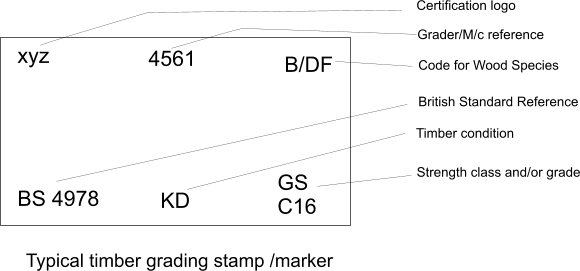
Every piece of strength graded timber should be clearly and indelibly marked with the following information.(See first link below)
|
A typical stamp is shown below