Iron and its alloys is the most widely used material used in mechanical engineering. This page include notes on the different methods used to produce the metal from the raw materials.
Pig Iron and recycled scrap metal is the basic feedstock to all the iron steel making processes. Pig Iron is generally produced continuously in blast furnaces from a feedstock of iron ore, coke, lime etc. The resulting pig iron is impure with a carbon content at about 4% and up to 4% total of silicon, manganese, phosphorus and sulphur. The pig iron and scrap are used to produce cast iron, and steel.
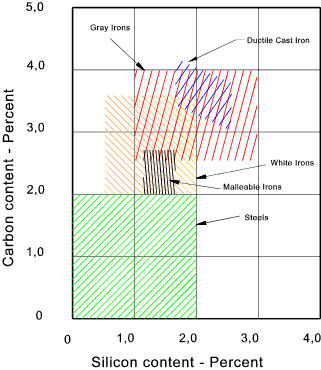
The various products produced from iron alloyed mainly with carbon and silicon are identified with respect to their contents in the chart below....
Cast iron......Cast Iron Notes
Cast Irons are a family of ferrous metals with a wide range of properties produced by being cast into shape as opposed by being formed. " Cast Irons contain 2% to 4% Carbon and 1% to 3% Silicon. Other elements are used to control specific properties. Cast irons have a wide range of mechanical properties which make them suitable for use in structural components and components used for bearings. The wide spread use of cast iron is as a result of its low cost and versatile properties.
Wrought iron
Wrought Iron is no longer produced in commercial quantities, the wrought iron that survives contains less than 0,035 percent carbon. It therefore consists essentially of ferrite, but its strength and malleability are reduced by entrained puddling slag, which is elongated into stringers by rolling. As a result, breaking a bar of wrought iron reveals a fibrous fracture not unlike that of wood. The other elements present are silicon (0,075 to 0,15 percent), sulfur (0,01 to 0,2 percent), phosphorus (0,1 to 0,25 percent), and manganese (0,05 to 0,1 percent). This relative purity is the reason why wrought iron has a reputation for good corrosion resistance.
Steel .....Plain Carbon Steel Notes
Steel is by definition an alloy of iron and carbon in which the carbon content ranges up to 2 percent (with a higher carbon content, the material is defined as cast iron). By far the most widely used material for building the world's infrastructure and industries, it is used to fabricate everything from pins to oil tankers. The main reasons for the popularity of steel are the relatively low cost of making, forming, and processing it, the abundance of its two raw materials (iron ore and scrap), and its unparalleled range of mechanical properties.
The three major steelmaking processes are--basic oxygen, open hearth, and electric arc, the first two, with few exceptions, use liquid blast-furnace iron and scrap as raw material and the latter uses a solid charge of scrap and dri (direct reduced iron). The products of the steelmaking process are continuous cast section ready for hot rolling and cast billets for further processing.
Alloy steels........Alloy Steels Notes
Plain carbon steel is produced with a wide range of mechanical properties with comparatively low cost. To extent the range of properties of steel alloys have been developed. The benefits resulting include
|
The principle elements that are used in producing alloy steel include nickel, chromium, molydenenum, manganese, silicon and vanadium. Cobalt , copper and lead are also used as alloying elements.
Cast Steels..
Reference Standards
BS EN 10213-1:1996...Technical delivery conditions for steel castings for pressure purposes. General
BS EN 10213-2:1996...Technical delivery conditions for steel castings for pressure purposes. Steel grades for use at room temp. and at elevated temp.
BS EN 10213-3:1996...Technical delivery conditions for steel castings for pressure purposes. Steels for use at low temperatures
BS EN 10213-4:1996...Technical delivery conditions for steel castings for pressure purposes. Austenitic and austenitic-ferritic steel grades
BS 3146-1:1974 ...Specification for investment castings in metal. Carbon and low alloy steels
Steel castings are normally used in the annealed or normalised state. However when higher strength steels or steels with other enhanced properties are required a full regime of heat treatment options are available. Low carbon steel castings are often produced for case hardened products which have hard surfaces with tough ductile cores.
Similar steel and steel alloy specifications are available to those for Forged and drawn steel products. The notes provided for carbon steel and alloy steel generally apply for cast steel
Steel castings are chosen in preference to wrought steel products when complicated shapes are required. The casting process eliminates expensive forging operations. Casting can also provide significant benefits compared to welded fabrications and welding operations with their inherent strength and fatigue problems. Casting has significant benefits when medium to large quantities of components are required. The cost of the pattern is then offset against the savings resulting from batch production
Components designed for steel castings should follow good principles
|
It is important to note that thin sections are generally stronger than thick section and casting design and heat treatment processes should be optimised to ensure that the final manufactured cast item has acceptable physical properties throughout.
Steel castings as cast have relatively low fatigue resistance withan endurance ratio (fatigue strength/ultimate strength) as low a 0,4. This ratio can be improved by heat treatment and improvement of the surface finish. Low and medium alloy steels have a slightly improved endurance ratio compared to plain carbon steels