A milling machine is a machine tool that cuts metal with a multiple-tooth cutting tool called a milling cutter. The workpiece is fastened to the milling machine table and is fed against the revolving milling cutter. The milling cutters can have cutting teeth on the periphery or sidesor both. The cutting teeth can be straight or spiral.
Milling machines can be classified under three main headings:..
|
Milling attachments can also be fitted to other machine tools including lathes planing machines and drill bench presses can be used with milling cutters.
Additional Notes
Cutting Tool Materials... Cutting Tool Materials..
Cutting Fluids... Cutting Fluids..
Milling Cutters
There are a wide range of milling cutters as illustrated in BS 122-1. these include
|
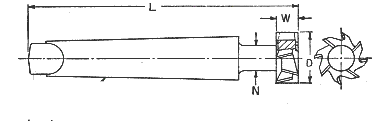
Tee Slot Milling Cutter
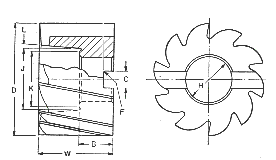
Shell End Mill
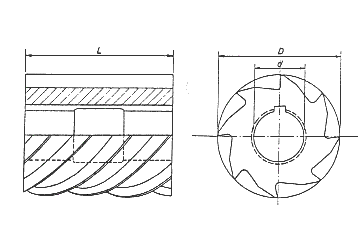
High Helix Cylinderical Cutter
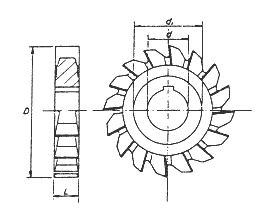
Slotting Cutter
Relevant Standards
BS 122-1:1953..Milling cutters. Milling cutters
BS 122-4:1980..Milling cutters. Screwed shank end mills and slot drills
BS 122-5:1986..Milling cutters. Specification for mounting dimensions and accessories
BS 122-6:1995, ISO 240:1994..Milling cutters. Specification for dimensions for interchangeability of cutter arbors and cutter mandrels
Column and Knee Machine -Vertical Milling Machine
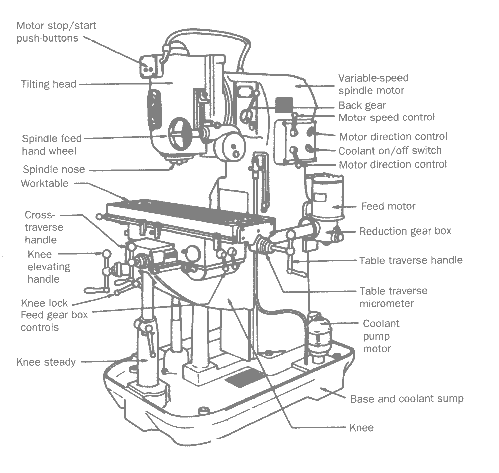
Vertical milling machines have their cutting tool spindles vertical and are characterised by by their heavy overarms which are integral with their columns. This provides rigid support for the spindle housing which is set at a fixed distance from from the column. The milling head can be adjusted vertically
|
|
|
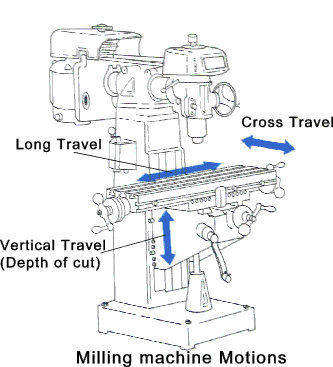
The diagram below shows the primary controlled motions available with this type of milling machine.
|
Column and Knee Machine - Horizontal Milling Machine
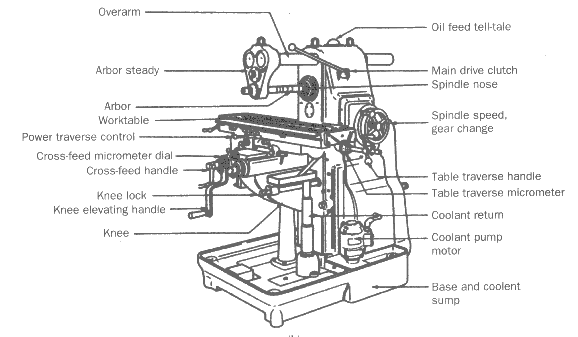
This is the basic milling machine configuration. The workpiece can be fed in all three axes and is suitable for short production runs but it is not as rigid as a fixed bed machine and should not be used for heavy duty work. Because of the large number of controls it is relatively slow to operate.
Fixed Bed Milling Machines
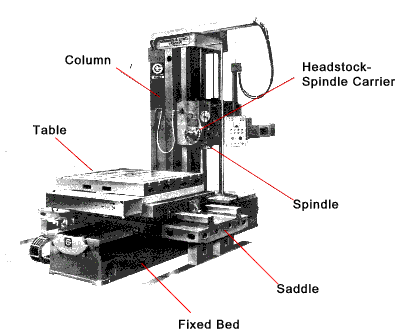
Fixed bed or production type machines are designed for rapid metal removal requiring the minimum of operator involvement. On this type of machine the table is fixed permitting machine table movement in one horizontal direction only. the workpiece has to be fixed in one location on the table and all vertical movements for feeds and lateral positioning are by moving the spindle in the spindle carrier mounted on the headstock. A plain machine has just one spindle and a duplex machine has two spindles. this type of machine can have one column or two columns providing more rigidity.
Horizontal Milling Feed Direction
The direction of feed in relation to the direction of cutter rotation is and important factor in horizontal milling. Conventional up milling requires that the workpiece is fed against the rotation of the cutter. In down milling the workpiece moves in the seam direction as the surface of the rotating cutter. The tow alternatives are shown in the figure below
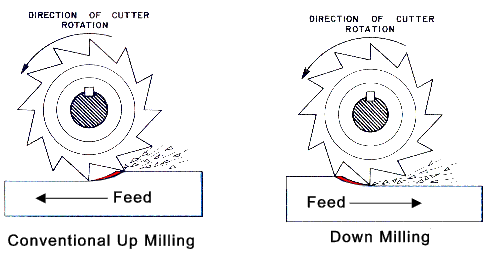
In up milling the cutter tooth starts cutting into clean metal with zero chip thickness and ends with the maximum chip width and rought metal. The cutter stays sharp long and the motion of the feed compensates for wear or backlash in the feed system. The cutter tends to lift up the workpiece and high clamping forces are required.
In down milling the cutter tooth starts cutting into the rough metal with a thick chip resulting and ends by producing a thin chip. The finish is smoother but the forces tend to drag the workpiece along under the cutter . Any looseness in the feed system could result in vibration and chatter with more risk to the cutter. This method is used to produce a good surface finish and for small workpieces that cannot be firmly clamped.
Cutting speed HSS cutting tools , Roughing
The table below provides some very approximate cutting speed for different materials using HSS cutters on roughing cuts. For finishing cuts the speeds would increase 20% to 50%. For cermet (cemented carbide)tipped teeth significantly higher cutting speeds are possible see table below.
Surface Speeds
|
Feeds
|
|||||||||||||||||||||||||||||||||||||||||||||||||||||||||||||||||||||||||||||||||||||||||||||||||||||||||||||||||||||||||||||||||||||||||
Cermet Surface Speed /Feed Rates
The table below provides some indicative values for the surface speeds and feeds (mm/tooth) that can be achieved using cermet type e.g cemented carbide tipped milling cutters.
The faster speeds and lower feeds for finishing. Thelower speeds and higher feeds for roughing
| Material being machined ... | Surface Speed (m/min) |
Feed / tooth (mm) |
| Aluminum low silicon ( < 8% ) |
450-550 | 0,12-0,18 |
| Aluminum, Aluminum-bronze high silicon ( > 8% ) |
250-350 | 0,13-0,2 |
| Bronze | 300-330 | 0,13-0,2 |
| Cast Iron,Malleable | 120-220 | 0,08-0,15 |
| Cast Iron Grey | 180-360 | 0,1-0,4 |
| Cast Iron Nodular (ductile) | 180-260 | 0,1-0,2 |
| Copper | 370 | 0,18 |
| Inconel | 30 | 0,08 |
| Stainless steel-Ferr/Mart | 500-800 | 0,05-0,15 |
| Stainless steel- cast | 150-250 | 0,08-0,15 |
| Stainless steel-304 | 120 | 0,08 |
| Stainless steel-316L | 90 | 0,08-0,1 |
| Steel, unalloyed | 250-430 | 0,003-0,006 |
| Steel, low alloy |
180-360 | 0,08-0,15 |
| Steel, low alloy hardened |
120-220 | 0,05-0,15 |
| Steel, high alloy annealed |
120-220 | 0,076-0,15 |
| Steel, high alloy hardened |
76 | 0,05 |
| Steel, cast low alloy |
180-360 | 0,1-0,2 |
| Steel, cast high alloy |
120-220 | 0,08-0,15 |
| Titanium | 30-64 | 0,05-0,08 |
| Tungsten | 120 | 0,05-0,1 |