Click arrows to page adverts

| Disclaimer: The information on this page has not been checked by an independent person. Use this information at your own risk. |
|
Click arrows to page adverts |
|
|
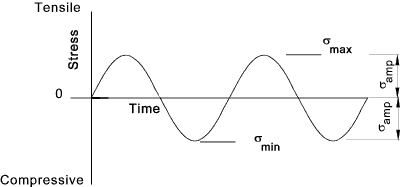
Fatigue Action types The fatigue action types refers to the types of stress loading that results in fatigue failures in engineering materials. In determining fatigue stress levels using standard test equipment the test specimens are subject to alternative/reversed stress levels... The cyclic stress varies from σ a tensile to σ a compressive. The mean stress = 0.
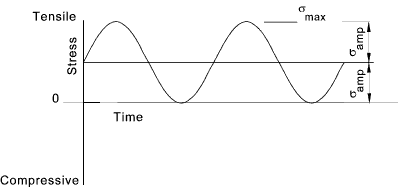
The fatigue strength values for metals are based on this loading condition with the published fatigue strength values S'n, representing the material fatigue strength property, being the σ amp value at failure. In the repeated stress loading condition the stress varies between zero and a maximum tensile (or compressive) stress in a cyclic manner...
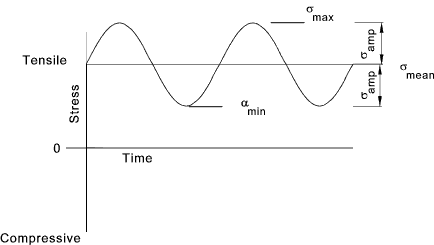
A stress condition normally experienced in practice is a cyclic stress imposed on a steady load stress..
For Alternating Stress... R = -1 The mean stress can have a significant effect on the failure due to fatigue and must be considered in combination with the alternating stress..(Under normal fatigue loading conditions the mean stress is small compared to the alternating stress.)
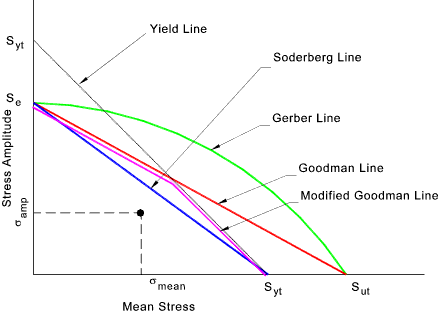
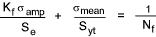
The Mean Stress σ mean is plotted on the horizontal axis and the alternating stress σampis plotted on the vertical axis. If the point of the combined stress is below the Soderberg line then the component will not fail . This is a very conservative criteria based on the material yield point Syt
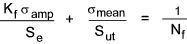
If the point of the combined stress is below the relevant Goodman line then the component will not fail . This is a less conservative criteria based on the material Ultimate strength ield point Sut
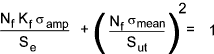
If the point of the combined stress is below the Gerber line then the component will not fail . This is a less conservative criteria based on the material Ultimate strength Sut
|
Useful Links..
|
|
Please Send Comments to Roy Beardmore
Last Updated 13/01/2013